

Udyam MSME Registration 2026: Eligibility, Benefits & Step-by-Step Process
Complete guide for SME owners, manufacturers, and traders — unlock collateral-free loans, government tenders, and subsidies through Udyam Registration.
Enterprises Registered
(Jan 2026)
Government Fee
100% Free
Medium Enterprise
Turnover Limit
MSME Contribution
to India's GDP
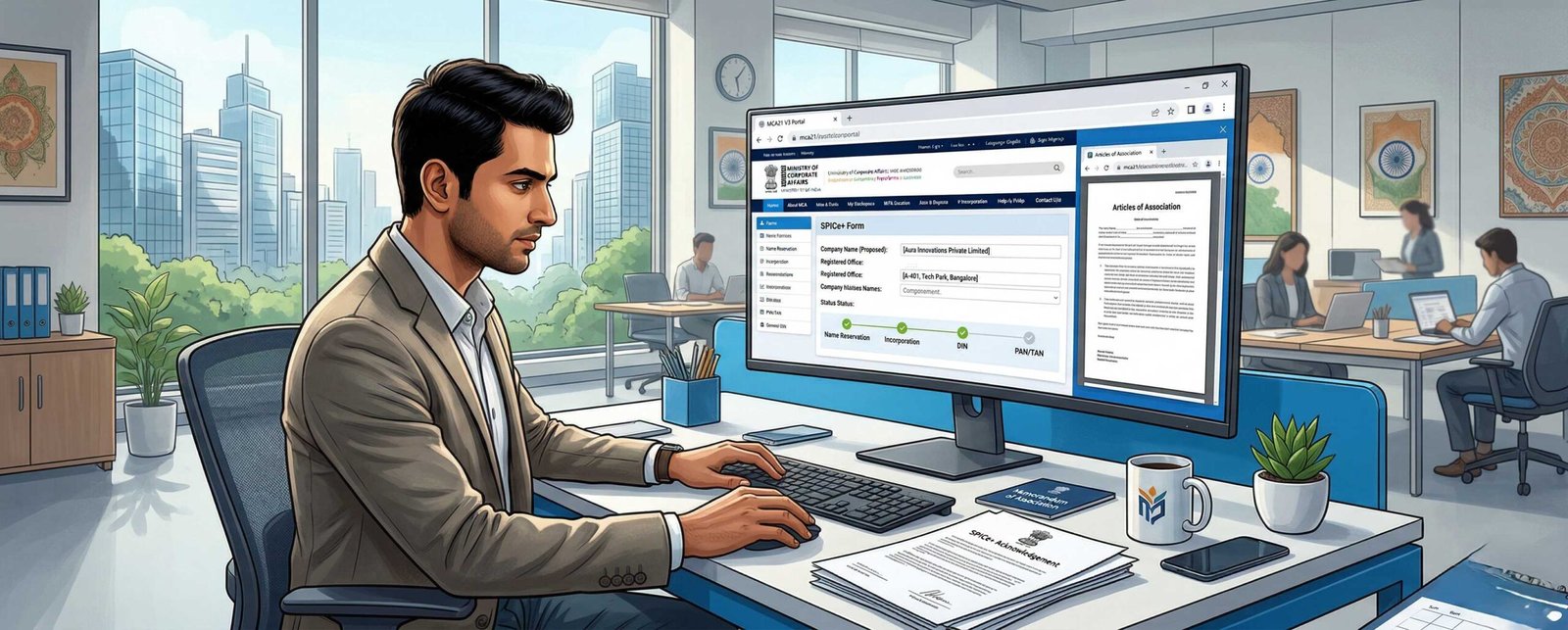
- Zero cost, fully online: Udyam MSME Registration 2026 is free at udyamregistration.gov.in — no document uploads, no agent fees required.
- Revised classification limits (w.e.f. 1 April 2025): Micro ≤ ₹1 Cr investment / ₹5 Cr turnover; Small ≤ ₹10 Cr / ₹50 Cr; Medium ≤ ₹50 Cr / ₹250 Cr.
- Collateral-free credit access: Registered MSMEs can access CGTMSE-backed collateral-free loans and qualify for priority sector lending through scheduled banks.
- Delayed payment protection: Under MSMED Act, buyers must pay MSMEs within 45 days — delays attract interest at 3× the RBI bank rate.
- Lifetime validity with annual update: Your Udyam Registration Number (URN) never expires — verify and update turnover/investment data annually at udyamregistration.gov.in.
Udyam MSME Registration 2026 is India's most consequential business formalisation step for small enterprises. Whether you run a manufacturing unit, a trading firm, or a service business, Udyam Registration connects your enterprise to a full ecosystem of credit, procurement, and policy support that informal businesses never access. With over 7.51 crore enterprises now registered and the government having revised classification limits effective April 1, 2025, the scope of eligibility has expanded significantly. This guide walks through who qualifies, what you unlock, and exactly how to complete the Udyam Registration process online — step by step.
1 What Is Udyam MSME Registration 2026?
Udyam MSME Registration 2026 is the official digital recognition system operated by the Ministry of Micro, Small and Medium Enterprises (MoMSME), Government of India. Launched in July 2020 as a replacement for the Udyog Aadhaar Memorandum (UAM) system, Udyam Registration assigns a permanent Udyam Registration Number (URN) and a QR-coded digital certificate to every eligible enterprise.
The registration operates on a self-declaration model. There are no physical documents to upload, no government fees, and no in-person visits. Aadhaar-based OTP authentication and PAN-linked tax validation handle identity and financial verification on the backend. Once registered, your enterprise is machine-readable across India's banking, procurement, and compliance infrastructure.
Unlike the older system, Udyam Registration applies a unified composite criterion — investment AND turnover — to classify enterprises into Micro, Small, or Medium categories. Manufacturing and services businesses use identical thresholds. Export turnover is excluded from the calculation, which is a critical advantage for businesses with significant overseas revenues.
📌 UAM holders must migrate: Enterprises still on the old Udyog Aadhaar Memorandum must re-register on the Udyam portal. Select the "Migration" option and enter your existing registration number. Your business history and classification history are preserved during migration.
2 Who Is Eligible for Udyam Registration in 2026?
Eligibility for Udyam MSME Registration 2026 is broad by design. Any enterprise that meets the financial classification thresholds can register — regardless of legal structure, sector, or geography. The following entity types qualify:
✅ Eligible Entity Types
- Sole proprietorships
- Partnership firms
- Private Limited Companies
- Limited Liability Partnerships (LLPs)
- One Person Companies (OPCs)
- Hindu Undivided Families (HUFs)
- Co-operative societies and trusts
- Self-Help Groups (SHGs)
🏭 Eligible Business Sectors
- Manufacturing enterprises
- Service enterprises
- Retail and wholesale traders
(eligible for priority sector lending) - Freelancers and professional practices
- Export-oriented units
- Startups (if within MSME thresholds)
- Businesses with foreign direct investment (FDI)
Registration is not legally mandatory. However, without Udyam Registration, businesses cannot access MSME-specific loans, government tender preferences, delayed payment protection, or subsidy schemes. For any enterprise planning to grow within the formal ecosystem, Udyam Registration is a prerequisite — not optional compliance.
3 Revised MSME Classification Limits 2026 — Micro, Small, Medium
The government revised MSME classification limits effective 1 April 2025 under Budget 2025 announcements. These thresholds determine which category your enterprise falls into and which benefits apply. Classification uses a composite criterion — both investment in plant/machinery/equipment AND annual turnover must be within limits. Export turnover is excluded from the annual turnover figure.
| Category | Investment in Plant & Machinery / Equipment | Annual Turnover (excl. exports) |
|---|---|---|
| Micro | Up to ₹1 Crore | Up to ₹5 Crore |
| Small | Up to ₹10 Crore | Up to ₹50 Crore |
| Medium | Up to ₹50 Crore | Up to ₹250 Crore |
Classification is dynamic. If your turnover or investment increases and pushes you into a higher category, the system reclassifies upward automatically. For downward reclassification, your enterprise must fall below the ceiling on both criteria simultaneously — a design that prevents accidental loss of benefits during temporary revenue dips.
⚠️ Upward reclassification grace period: When an enterprise moves up to a higher MSME category, it continues to receive all non-tax benefits of its previous (lower) category for three years from the date of reclassification. Plan your growth timelines accordingly to maximise benefit access.
4 Benefits of Udyam Registration 2026 — What You Actually Unlock
Udyam Registration delivers concrete operational and financial advantages. These are not aspirational — they are legally enforceable entitlements and scheme eligibilities that registered enterprises can immediately exercise.
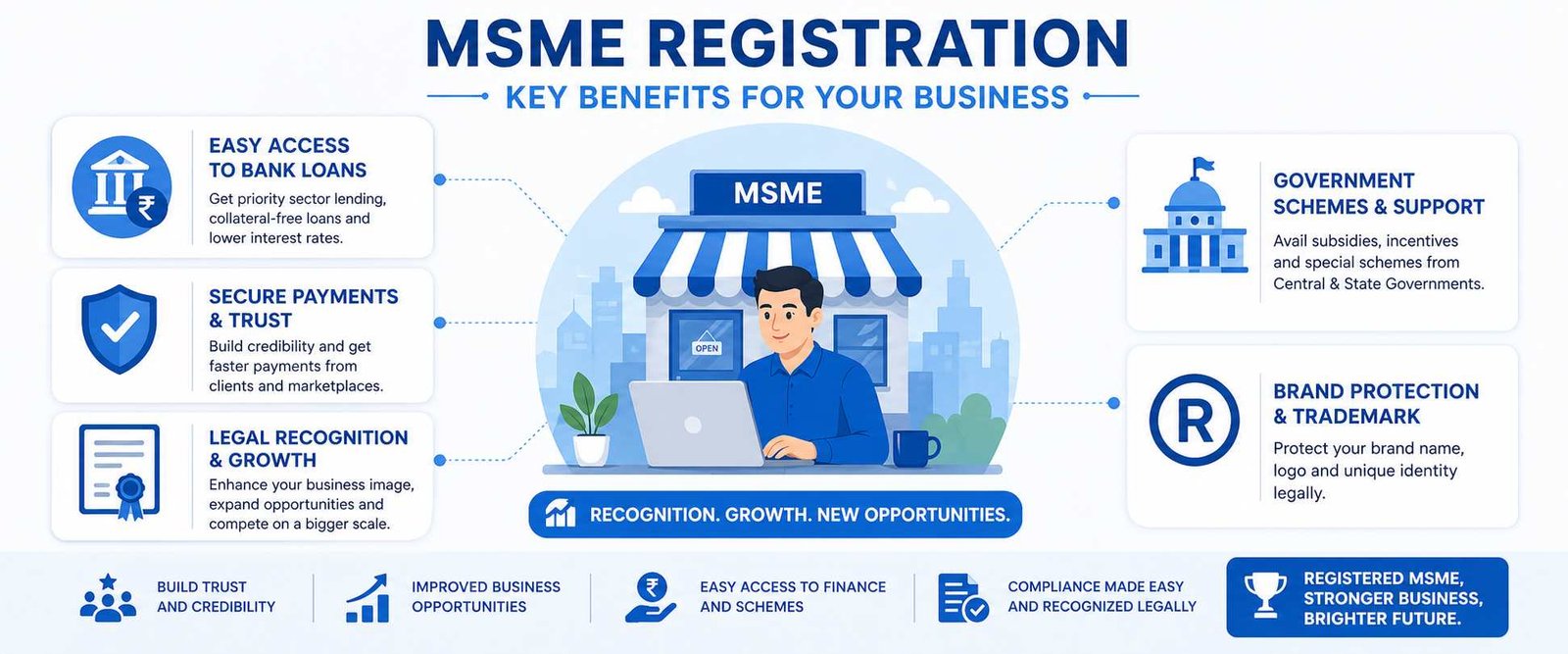
Financial Schemes Linked to Udyam Registration
Beyond credit access, Udyam Registration unlocks eligibility for multiple government financial schemes. The Credit Guarantee Fund Trust for Micro and Small Enterprises (CGTMSE) provides collateral-free loan guarantees to banks lending to registered Micro and Small enterprises. The RAMP (Raising and Accelerating MSME Performance) scheme, supported by the World Bank, provides institutional capacity and market access support. The government's ₹45,000 crore MSME export package and ₹10,000 crore equity funding allocation (announced for FY 2025-26) are specifically channelled through registered enterprises under the Udyam ecosystem.
5 Documents Required for Udyam Registration 2026
Udyam Registration requires no physical document uploads. The process is entirely self-declaration-based, verified through Aadhaar OTP and tax-linked database validation. Keep the following information ready before starting your application:
📄 Mandatory Information
- Aadhaar number of the authorised person (linked mobile for OTP)
- PAN card of the enterprise or proprietor
- GSTIN — mandatory if GST registration applies to your business
- Bank account number + IFSC code
- NIC codes for your primary business activity
📊 Financial Data to Enter
- Investment in plant, machinery, or equipment
- Annual turnover (previous financial year)
- Export turnover (declared separately — excluded from classification)
- Registered business name and complete address
- Date of commencement of business
For companies and LLPs, the Aadhaar of the authorised signatory (director or designated partner) is used. For proprietorships, the proprietor's Aadhaar is required. The system automatically validates PAN against income tax databases and checks for any existing registrations, preventing duplicate URN issuance.
6 Step-by-Step Udyam Registration Process 2026
The complete Udyam MSME Registration 2026 process runs on the official portal at udyamregistration.gov.in. The process typically completes within 15–20 minutes. No agent, consultant, or third-party platform is required — and no government fee is charged at any stage.
Go to udyamregistration.gov.in. Select "For New Entrepreneurs who are not Registered yet as MSME or those with EM-II." If you are migrating from UAM, choose the Migration option instead.
Enter your Aadhaar number and the registered name exactly as it appears on your Aadhaar card. Click "Validate and Generate OTP." Enter the OTP received on your Aadhaar-linked mobile number.
Select your organisation type (Proprietorship, Partnership, Company, LLP, etc.) and enter your PAN number. The system validates PAN against income tax databases and checks for existing MSME registrations under that PAN.
Enter your registered business name, complete postal address with district and state, operational location, official email ID, and mobile number. Add your bank account details with IFSC code accurately.
Choose the National Industry Classification (NIC) codes that accurately represent your primary business activities. You may select multiple NIC codes if your enterprise operates across manufacturing and services simultaneously.
Input investment in plant, machinery, or equipment and previous year's annual turnover. Declare export turnover separately — it will be excluded from classification. The portal auto-applies composite criteria and assigns your MSME category.
Submit the application after a final OTP verification. Your Udyam Registration Certificate with a permanent URN and QR code is instantly generated and dispatched to your registered email address. No physical copy needs to be collected.
Need Help with Udyam Registration or MSME Compliance?
Validraft handles Udyam Registration, MSME filings, and related licence applications — accurately and without the back-and-forth.
Get a Free Consultation → View Licence Services7 Common Mistakes to Avoid During Udyam Registration
Errors in your Udyam Registration application can affect benefit eligibility, MSME category classification, and cause future verification issues with banks and government agencies. These are the most frequent mistakes to avoid:
- Mismatch between Aadhaar name and PAN name: Even minor spelling differences cause OTP and PAN validation failures. Verify both documents before starting.
- Incorrect NIC code selection: NIC codes determine scheme eligibility and procurement preferences. Selecting the wrong code can lock you out of sector-specific benefits.
- Including export turnover in total turnover: Export revenues must be declared separately. Including them inflates your turnover figure and may push you into a higher MSME category incorrectly.
- No annual update of financial data: The Udyam portal requires annual update of investment and turnover figures. Failure to update can result in incorrect classification and reduced scheme access.
- Using third-party "facilitation" websites: Many websites charge fees for a registration that is free at udyamregistration.gov.in. The official portal requires no payment at any stage.
- Incorrect GSTIN entry: If your business is GST-registered, ensure the GSTIN matches your registered PAN. Mismatches create verification failures that delay certificate generation.
8 Post-Registration Compliance: Annual Update Obligation
Your Udyam Registration Number (URN) is permanent and carries lifetime validity — it does not expire when your business is operational. However, maintaining accurate classification and full benefit access requires an annual update on the Udyam portal.
Every financial year, once your IT return and GST data are filed, log in to the Udyam portal and update your latest investment and annual turnover figures. The portal cross-verifies these against GSTN and income tax databases. If your financial figures have changed and your MSME category shifts, the system reclassifies automatically. Businesses that fail to update may retain a classification that no longer matches their actual scale — which creates problems during bank loan applications, tender submissions, and government scheme verification.
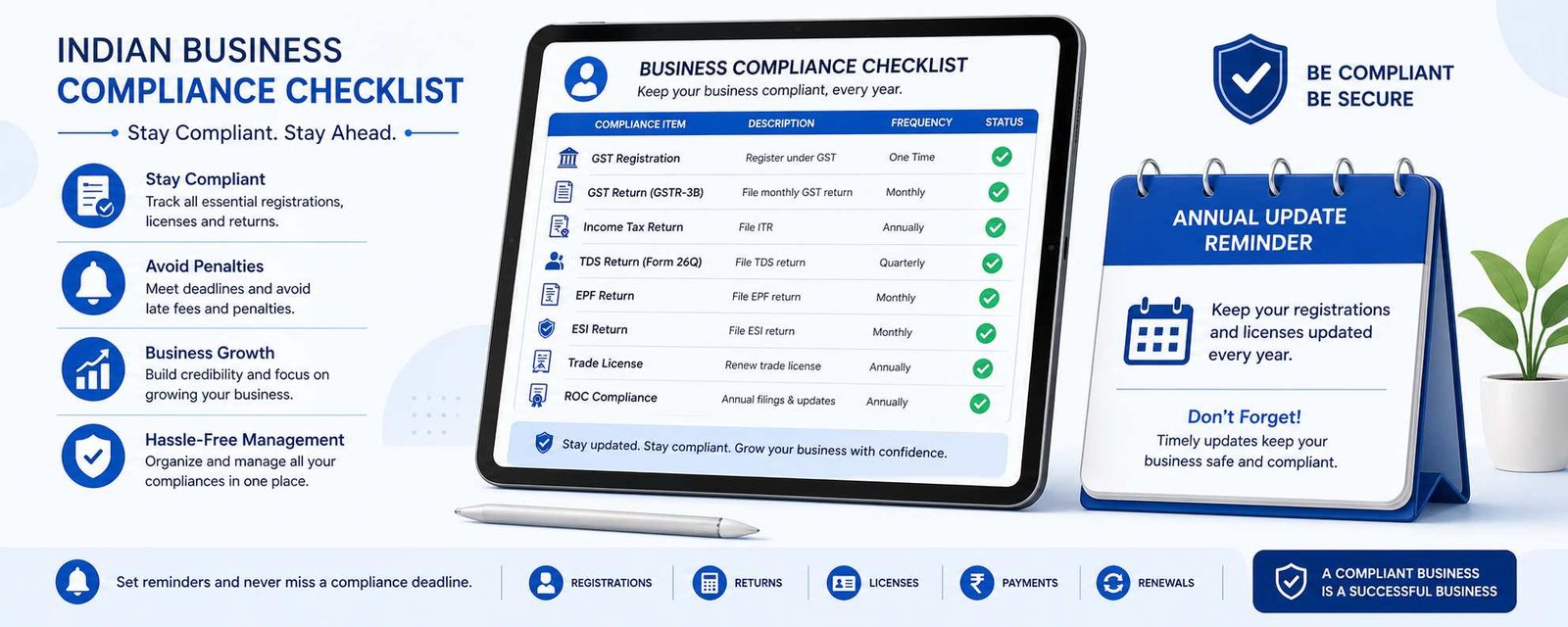
📅 When to update: Update your Udyam profile annually after filing your GST returns and income tax return for the previous financial year. The update window typically opens after the ITR filing season (post September 30). Verify the current update schedule at udyamregistration.gov.in.
9 Frequently Asked Questions — Udyam MSME Registration 2026
Udyam Registration is not legally mandatory under the MSMED Act. However, businesses that are not registered cannot access collateral-free loans, government tender preferences, delayed payment protection under MSMED Act, or any MSME-specific scheme. For any business aiming to operate within India's formal lending and procurement ecosystem, Udyam Registration is effectively a prerequisite. Register free at udyamregistration.gov.in.
Yes. Private Limited Companies, LLPs, and even companies with foreign direct investment (FDI) can obtain Udyam Registration if they meet the revised MSME classification thresholds — investment up to ₹50 Crore and turnover up to ₹250 Crore. For companies, the Aadhaar of an authorised director or signatory is used for OTP verification.
Udyog Aadhaar Memorandum (UAM) was the earlier system that issued a 12-digit Udyog Aadhaar Number. It was replaced by Udyam Registration in July 2020. Udyam Registration applies revised composite financial criteria, issues a permanent URN with QR code, and integrates with GSTN and income tax systems for automated verification. All UAM holders must migrate to the Udyam portal to retain MSME recognition and benefit access.
Yes. Retail and wholesale traders are eligible for Udyam Registration. While the MSMED Act primarily covers manufacturing and services, the government's policy specifically extends priority sector lending benefits to registered traders. This allows trading enterprises to access working capital and credit lines through scheduled banks under MSME lending guidelines. Verify the current policy at msme.gov.in.
Failure to update annual investment and turnover data on the Udyam portal can result in your MSME classification becoming inaccurate relative to your actual scale. This creates verification mismatches during bank loan applications, government tender submissions, and scheme eligibility checks. Banks and procurement platforms increasingly verify Udyam data in real-time — outdated information can disqualify your enterprise from benefits it would otherwise qualify for. Annual updates are mandatory for maintaining accurate MSME status.
GSTIN is required only if your business is legally obligated to register under GST. If your turnover is below the GST threshold or your business falls under an exempt category, you can complete Udyam Registration without a GSTIN. The portal accepts self-declaration in such cases. If you subsequently obtain GST registration, update your Udyam profile to include the GSTIN at udyamregistration.gov.in.
10 Conclusion
Udyam MSME Registration 2026 is not a regulatory formality — it's the entry credential for India's formal business ecosystem. With revised classification limits now reaching up to ₹250 Crore turnover for Medium enterprises, a significantly larger pool of businesses qualifies. The process is free, fully online, and completes in under 20 minutes at the official Udyam portal.
The practical value of Udyam Registration compounds over time: collateral-free credit access, protected payment terms, government procurement advantages, and IP cost reductions are benefits that accumulate with every transaction and contract. Businesses that delay Udyam Registration are not simply missing paperwork — they are structurally excluded from credit channels and public tenders that registered competitors access freely.
If your enterprise falls within the MSME thresholds and you haven't yet completed Udyam MSME Registration 2026, register at udyamregistration.gov.in today. If you need help evaluating eligibility, selecting NIC codes correctly, or managing post-registration MSME compliance, the Validraft team is available for a no-obligation consultation.
Register Your MSME or Get Expert Guidance — Start Today
Validraft handles Udyam Registration, MSME compliance, and related licence filings for SMEs, manufacturers, and traders across India.
Get a Free Consultation → View All Licence Services📎 Authoritative Sources
- → udyamregistration.gov.in — Official Udyam Registration Portal, Government of India
- → msme.gov.in — Revised MSME Classification w.e.f. 1 April 2025
- → msme.gov.in — FAQ: MSME Definition & Classification Criteria
- → msme.gov.in — Circulars & Official Notifications (Udyam Registration)