
Labour Codes 2026 & Shram Suvidha 2.0:
What Every Employer Must Do Now
Four Labour Codes commenced November 21, 2025. Full operational rollout from April 1, 2026. A single Shram Suvidha 2.0 registration replaces 100+ state labour licences. The 50% wage rule is live. Gratuity calculations have already changed. Here is the complete employer action guide.
Old Laws
Consolidated
New Labour
Codes Operative
Minimum Wage
Floor Rule (Basic+DA)
New Gratuity
Ceiling (Doubled)

- Four Labour Codes are now law, effective November 21, 2025 — the Code on Wages 2019, Industrial Relations Code 2020, Code on Social Security 2020, and OSH&WC Code 2020. Full operational alignment expected from April 1, 2026. Source: labour.gov.in
- Shram Suvidha 2.0 introduces a single all-India 5-year registration — one digital licence replaces the fragmented system of 100+ state-level and law-specific registrations. Register at registration.shramsuvidha.gov.in
- The 50% wage rule is live from November 21, 2025. Basic Pay + Dearness Allowance must constitute at least 50% of total CTC. If allowances exceed 50%, the excess is added back to “wages” for PF, ESI, gratuity, and bonus calculations — increasing statutory outgo by 5–15% for many employers.
- Gratuity ceiling doubled to ₹20 lakh (from ₹10 lakh). Fixed-term employees are now eligible for gratuity after just one year of continuous service — not five. Gratuity calculations under the new wage definition apply from November 21, 2025.
- Contract labour registration threshold raised to 50 workers (from 20). All-India licence valid for 5 years — no more state-by-state renewal.
- Gig and platform workers are now formally covered under the Code on Social Security 2020. Platform aggregators must contribute 1–2% of turnover (capped at 5% of gig worker payments) toward social security schemes.
The Labour Codes 2026 represent the most significant overhaul of Indian employment law since independence. Twenty-nine central labour laws — including the Minimum Wages Act 1948, Payment of Wages Act 1936, Payment of Gratuity Act 1972, Employees’ State Insurance Act 1948, and the Factories Act 1948 — have been consolidated into four comprehensive codes. The legal baseline shifted on November 21, 2025, when all four codes came into force. April 1, 2026 marks the operational rollout date: the point at which central and state rules are expected to be substantially aligned, and enforcement becomes the working reality for employers.
This guide covers what every employer — from a 10-person startup to a multi-state MSME — must understand and act on under the Labour Codes 2026 and the Shram Suvidha 2.0 portal: the 50% wage rule, the new registration system, changed gratuity and PF calculations, fixed-term employment rules, and the employer checklist for achieving compliance.
1 The Four Labour Codes 2026: What They Replace and What They Cover
Each of the four Labour Codes consolidates a distinct area of employment law. Together they subsume 29 previously separate statutes, eliminating overlapping definitions, conflicting thresholds, and duplicated filing requirements that had built up over eight decades of incremental amendment.
2 Shram Suvidha 2.0 — One Registration Replacing 100+ Licences
The most immediate operational change for employers under the Labour Codes 2026 is the transition to a unified registration system through the Shram Suvidha 2.0 portal. Under the old framework, employers operating across multiple states or under multiple labour laws were required to obtain separate registrations — EPF registration, ESI registration, Contract Labour Act licence, Building and Other Construction Workers registration, and state-specific shop and establishment registrations, among others. A mid-sized MSME operating in three states could hold 40–60 distinct registrations.
The new framework replaces this with a single all-India online registration through registration.shramsuvidha.gov.in. The unique Labour Identification Number (LIN) issued through this portal subsumes existing registration numbers across labour enforcement agencies. A single all-India licence for contract labour is valid for five years — no more state-by-state renewal cycles.
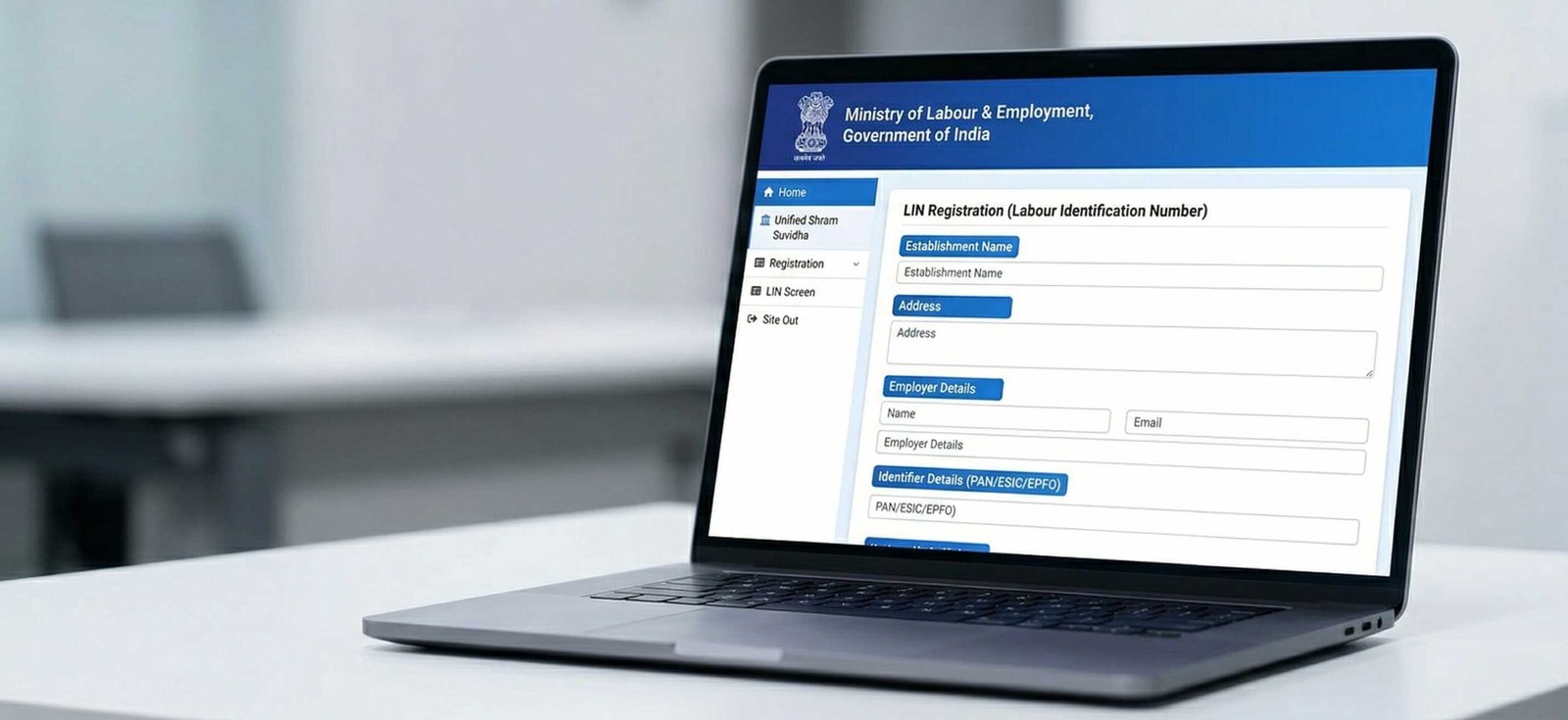
📌 New employers: If you have not yet registered on the Shram Suvidha portal and employ workers who attract EPF, ESI, or contract labour obligations, complete your LIN registration immediately. Existing registrations under old laws continue to remain valid during the transition, but the unified registration is the compliance pathway under the Labour Codes 2026.
3 The 50% Wage Rule — How It Changes Your Payroll From November 2025
The Code on Wages 2019 introduces a uniform, legally binding definition of “wages” across all establishments. The definition has a critical floor: Basic Pay + Dearness Allowance + Retaining Allowance must constitute at least 50% of an employee’s total remuneration. If the sum of all other allowances exceeds 50% of total CTC, the excess is automatically added back to wages for the purpose of statutory calculations.
This rule directly disrupts CTC structures that had artificially suppressed the “Basic Pay” component to minimise PF contributions, gratuity liability, and bonus obligations. The Ministry of Labour’s official FAQ dated March 16, 2026 confirms that overtime allowance, statutory employer PF/ESI contributions, and employer-side statutory bonus are excluded from the 50% calculation — only the components listed under Section 2(y) of the Code on Wages apply.
| Component | Old Wage Definition | New Wage Definition (Code on Wages) |
|---|---|---|
| Basic Pay + DA | No mandatory floor — could be 20–30% of CTC | Must be ≥ 50% of total remuneration |
| HRA, Special Allowance, LTA | Excluded from statutory wage base — reduced PF/ESI | If sum of allowances exceeds 50%, excess added to wages |
| PF Calculation Base | On basic wages (often artificially low) | On revised wages (higher base → higher employer PF outgo) |
| Gratuity Calculation Base | On basic wages only | On revised wages under new definition |
| ESI Eligibility Threshold | ₹21,000/month on old wage definition | ₹21,000/month — threshold applies on revised wages |
| Statutory Bonus Eligibility | ≤ ₹21,000/month salary | ≤ ₹21,000/month — now calculated on revised wage definition |
⚠️ Cost impact: Employers whose payroll structures had basic pay below 50% of CTC should expect statutory cost increases of 5–15% per employee on restructuring. Retrospective PF dues, gratuity shortfalls, and inspection penalties are the risk for non-compliance from November 21, 2025 onwards. Conduct a payroll audit immediately.
4 Gratuity, Fixed-Term Employment, and PF Changes Under Labour Codes 2026
Three specific employer liabilities have changed materially under the Labour Codes 2026 and are already in effect from November 21, 2025. These are not future obligations — the legal baseline has shifted and any employment service accrued after the commencement date must be assessed against the new rules.
Need a Labour Code Compliance Review for Your Business?
Validraft assesses your payroll structure, employment contracts, and registrations against the Labour Codes 2026 and provides a structured remediation plan.
Book a Compliance Review → Licence & Registration Services5 Gig and Platform Workers — New Obligations for Aggregators
The Code on Social Security 2020 formally recognises gig workers and platform workers as a distinct category entitled to statutory social security benefits for the first time in Indian law. This is not a future aspiration — the legal framework is active from November 21, 2025, with specific contribution rules being notified progressively by central and state governments.
6 Old Law vs New Codes: What Changed for Employers
- 📋 29 separate labour laws — different definitions per Act
- 📋 Multiple state-wise registrations required
- 📋 Basic pay could be 20–30% of CTC — PF minimised
- 📋 Gratuity ceiling: ₹10 lakh
- 📋 Fixed-term employees: gratuity only after 5 years
- 📋 Contract labour registration from 20 workers
- 📋 Retrenchment approval required from 100 workers
- 📋 Gig workers: no statutory social security coverage
- 📋 Paper registers acceptable for compliance
- 📋 “Workman” as the legal category — narrow coverage
- ✓ 4 codes — uniform definitions across all
- ✓ Single Shram Suvidha LIN — all-India, 5-year validity
- ✓ Basic + DA must be ≥ 50% of CTC — higher PF base
- ✓ Gratuity ceiling: ₹20 lakh
- ✓ Fixed-term employees: gratuity after 1 year
- ✓ Contract labour registration from 50 workers
- ✓ Retrenchment approval required from 300 workers
- ✓ Gig/platform workers: formal social security framework
- ✓ Digital records mandatory — paper registers non-compliant
- ✓ “Worker” and “employee” — broader statutory coverage
7 Penalties for Non-Compliance Under Labour Codes 2026
The Labour Codes 2026 restructure the penalty framework for non-compliant employers. First-time offences under most codes are compoundable — meaning employers can settle by paying a compounding fee (50% of the maximum fine for non-imprisonable offences; 75% for offences carrying imprisonment) rather than face prosecution. However, repeat offences within five years cannot be compounded, meaning prosecution is the only path.
| Offence Category | Maximum Penalty | Compoundable? |
|---|---|---|
| Non-payment of minimum wages | ₹50,000 + imprisonment up to 5 years (repeat) | Yes — first offence only |
| Failure to maintain digital records | ₹25,000 fine | Yes |
| Non-registration / unregistered establishment | ₹50,000 fine | Yes — first offence only |
| Non-payment of PF / ESI contributions | ₹1,00,000 + interest + damages | Subject to EPFO / ESIC proceedings |
| Violation of OSH provisions (serious injury) | Up to ₹2,00,000 and/or imprisonment | No — direct prosecution |
| Employer contribution shortfall — Gig workers | ₹5,000 per worker per month | Subject to notified state rules |
🚨 30-day notice before action: Employers receive 30 days’ notice before legal proceedings are initiated for most compoundable offences under the Labour Codes. This notice period is the practical window to correct the non-compliance. But for wage theft, safety violations causing injury, and repeat offenders — proceedings can begin without prior notice.
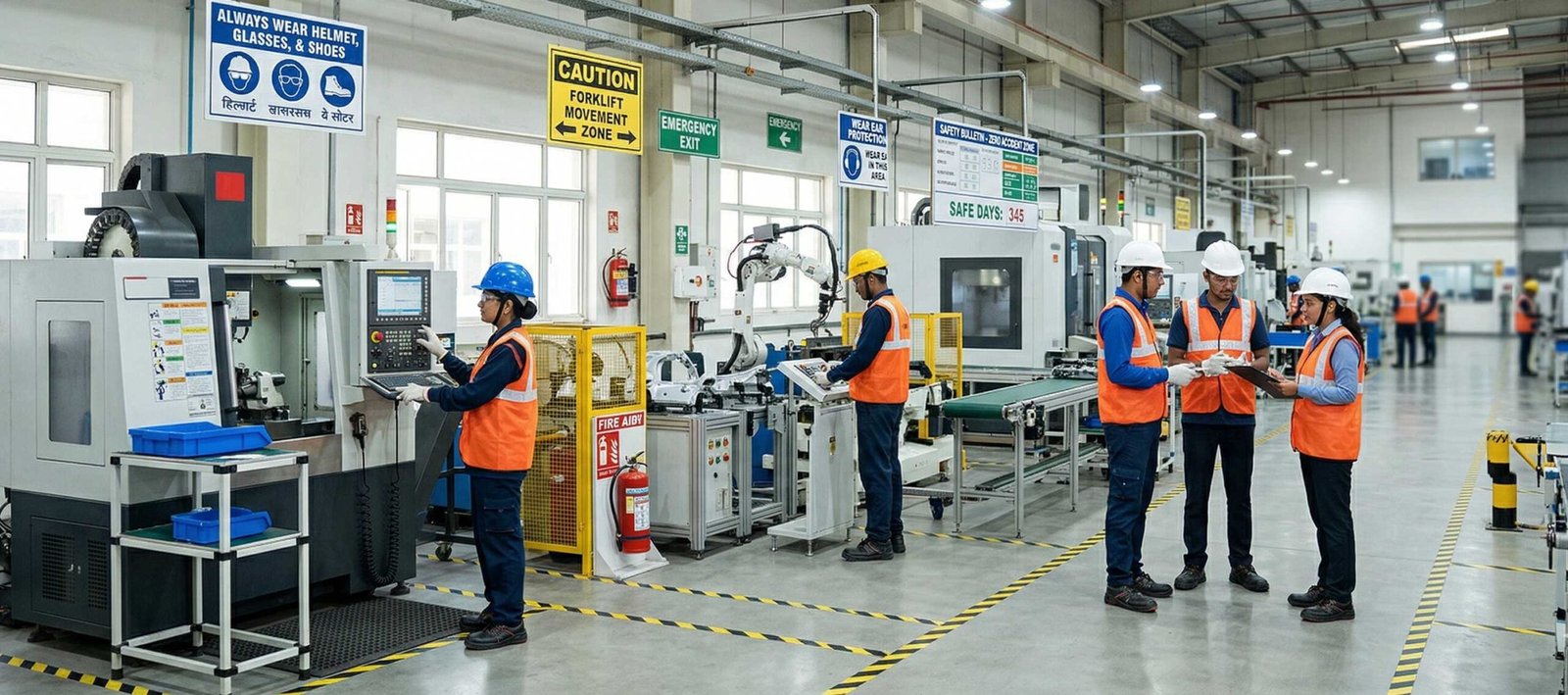
8 Labour Codes 2026 Compliance Checklist — Employer Action Plan
The following checklist covers every priority action for employers to achieve compliance with the Labour Codes 2026. Items marked as immediate have already been operative since November 21, 2025 — delay increases penalty exposure and retrospective liability.
Labour Codes 2026 Compliance — Validraft Can Help
From payroll audit and contract redrafting to Shram Suvidha 2.0 registration and digital records setup — Validraft delivers end-to-end Labour Code compliance for MSMEs and growing businesses.
Get My Compliance Plan → View All Services9 Frequently Asked Questions — Labour Codes 2026
10 Conclusion: Labour Codes 2026 Are Operative — Not Optional
The Labour Codes 2026 are not a reform to prepare for — they are a regime that commenced on November 21, 2025. Every employer in India with one or more workers is now operating under a new statutory baseline: the 50% wage rule, the revised gratuity structure, the fixed-term employment parity obligations, and the digital record-keeping mandate are all active. The fact that state-level rules are still being progressively notified does not suspend the legal obligations that flow from the codes themselves.
Shram Suvidha 2.0 offers a genuine simplification: one registration, one LIN, one unified return in place of 40–100 separate compliance actions per year for a multi-state employer. But the simplification only delivers its value if employers actively complete the transition — not if they continue operating under legacy registrations while the new framework passes them by.
For most businesses, the immediate priorities are a payroll audit against the 50% wage rule, an update to employment contracts and appointment letters, Shram Suvidha 2.0 LIN registration, and migration to digital attendance and wage records. Validraft’s compliance team works with founders, MSMEs, and growing businesses on each of these — from drafting updated employment agreements to completing Shram Suvidha registrations and structuring a compliant payroll under the Labour Codes 2026.